Creative workflows
What does magic hour do for video creators?
Magic Hour is associated with AI-assisted visual creation: turning ideas or source media into new images and video, and adapting existing visuals. This magichour guide explains those workflows without assuming that every tool offers the same inputs, controls, or results.
Independent guide: partner links open Kyncept, a separate service for text-to-image, image-to-video and text-to-video creation. No prompt, image or file is transferred from this page. Sign in to explore the tools. A new account receives three credits, enough to try image creation but not video generation, which costs at least ten credits.

One-line definition: the main creative paths
The useful distinction is whether you start with words, an image, or footage. Each starting point calls for a different kind of visual workflow.
How it works
An AI visual workflow usually moves from a source, through a creative direction, to a result that needs review. The precise controls depend on the tool you open.
-
1
Choose a starting point
Decide whether your project begins with a scene description, a still image, or footage you already have. That choice determines which workflow to investigate.
-
2
Describe the change
Specify the subject, desired motion, setting, or visual treatment. If you supply media, use material you have permission to edit and share.
-
3
Review the result
Check continuity, faces, text, and timing against your original intent. Revise the direction or source material if the output does not fit the project.
How it works: picture the change
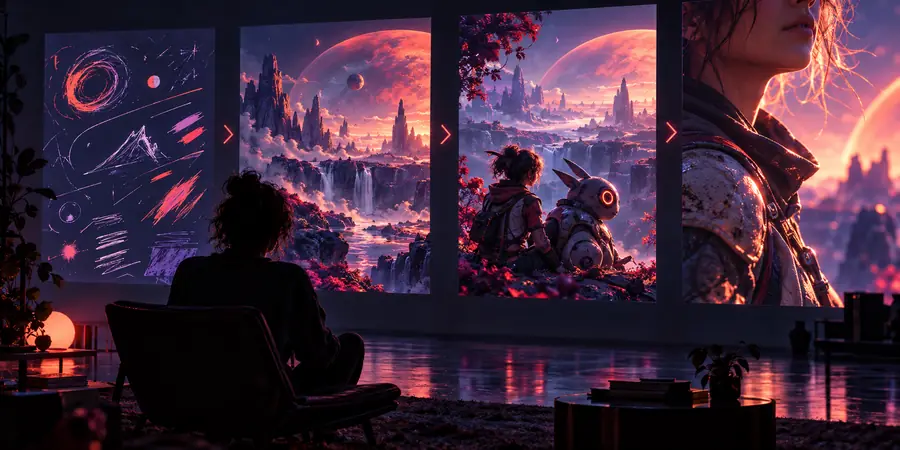
A still portrait and an interpreted moving scene illustrate the difference between providing source material and evaluating a creative result.
- Starting image
- Visual concept
These are illustrative images, not a verified before-and-after export from a specific tool.

Can / cannot do
AI assistance can speed up visual exploration, but a generated result is not a guarantee of accuracy, permission, or production readiness.
-
Guarantee a precise performance
Generated motion may change expressions, objects, or framing in ways the creator did not intend.
WorkaroundReview the full result and refine the source or creative direction before using it.
-
Grant rights to source material
A tool cannot establish that you own an uploaded image, a person's likeness, or the rights to footage.
WorkaroundUse authorized material and obtain consent where a person's identity is involved.
-
Replace final editorial judgment
Plausible-looking visuals may contain inconsistent details or communicate the wrong message.
WorkaroundCheck every scene in context and finish important edits in your usual review process.
-
Promise a particular feature here
This informational magichour page does not establish the controls or output options available at the linked destination.
WorkaroundCheck the destination's current interface and terms before planning around a specific capability.
Can / cannot do: choose the right starting point
The table compares two common approaches to making video. It describes workflow differences, not guaranteed features of any particular product.
Create from a description
Work from source media
Starting material
Create from a description
A written scene idea
Work from source media
An image or existing footage
Creative anchor
Create from a description
The words describing subject and action
Work from source media
Visible content in the supplied media
Useful when
Create from a description
Exploring a scene without a suitable source image
Work from source media
Developing or adapting a visual you already have
Main uncertainty
Create from a description
How the system interprets the description
Work from source media
How closely the result preserves the source
Review focus
Create from a description
Composition, action, and consistency
Work from source media
Identity, continuity, and unwanted changes
Best next revision
Create from a description
Clarify the scene description
Work from source media
Adjust the source or describe the intended change
Who uses it
Move from the question to a creative brief
Creators making concept clips, social visuals, or storyboards may use AI workflows to test a direction before committing to a final edit. Teams adapting existing assets can start with authorized media and compare the result with their original brief. If that fits your project, open the linked destination to see which tools and terms are currently available.
Explore creation tools- Start with a clear visual goal
- Use source media you can authorize
- Review the output before publishing
Its own FAQ
These answers unpack the practical meaning of the question, rather than promising a specific result from a tool you have not opened.
Magic Hour is associated with AI-assisted creation and editing of visual media, including workflows that begin with text, images, or video. The practical goal is to explore or adapt a visual idea, then review the result. Available tools and controls should be confirmed on the product you intend to use.
Image-to-video is one way to approach AI-assisted video creation: an existing still provides a visual starting point for a moving result. Whether a particular interface accepts your image or offers the motion control you need is something to check there. Always inspect the resulting clip for changes you did not intend.
Not every visual workflow begins with footage. Some begin with a written idea or a still image, while video-to-video work starts with an existing clip. Choose the approach that matches the source material you have and the change you want to make.
Treat generated visuals as material to review, not as an automatically approved final edit. Check accuracy, continuity, consent, and rights before publication. A human review matters especially when recognizable people or client assets appear.